Fraser River History in Brief: Stories from the Fraser Valley
Stand on the banks of the Fraser River at dawn near Hope BC and you will hear it before you see it — a low, steady rumble of water carrying snowmelt from the Rockies to the Pacific. Mist lifts off the surface, cottonwoods line the shore, and somewhere upstream a bald eagle watches the current. It is a scene that has played out for thousands of years, and it is the perfect place to begin understanding why this river shaped everything we know as the Fraser Valley. From Indigenous villages to gold rush boomtowns, from paddlewheelers to highways, the story of the Fraser is the story of our region. So let’s walk through it together, chapter by chapter.
Indigenous Roots Along the Fraser River
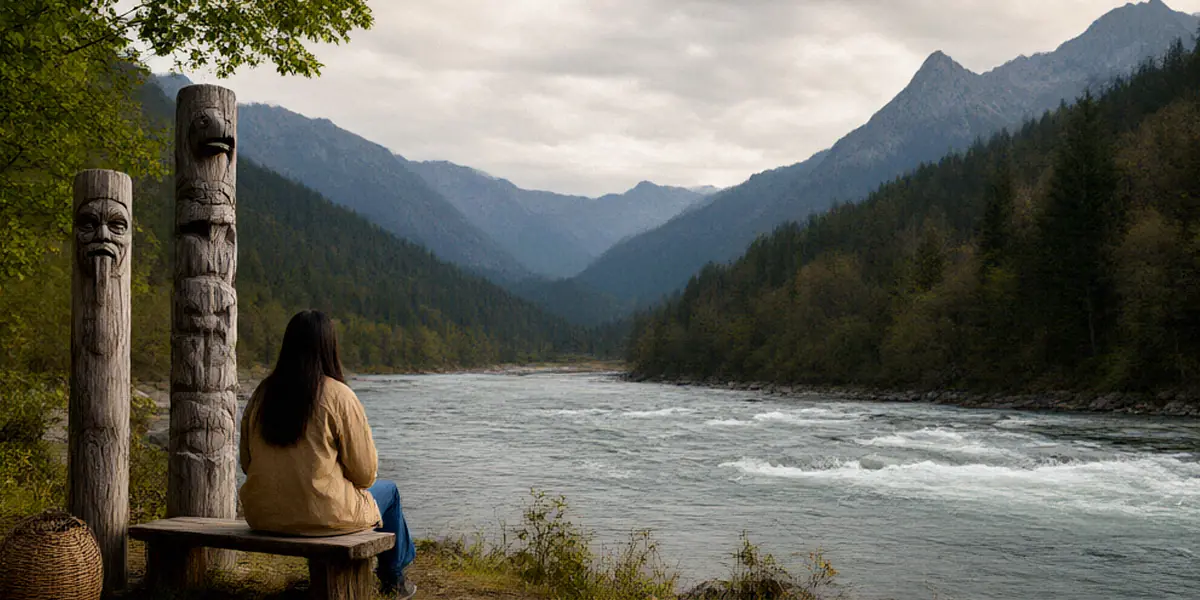
Long before any map carried the name “Fraser,” this valley was home. The Stó:lō peoples have lived along the Fraser River for thousands of years, building communities, fisheries, and trade networks that stretched from the coast into the interior. Any honest history of the Fraser Valley starts here, with the original stewards of this land.
Stó:lō Territory and the Mighty River
The Stó:lō — whose name means “People of the River” — hold territory that spans much of the Fraser Valley, including areas around present-day Chilliwack and Abbotsford. Villages and fishing sites dotted the riverbanks, positioned to take advantage of salmon runs, freshwater, and travel routes. The river was never just a waterway to the Stó:lō; it was a highway, a pantry, and a calendar all in one. When we paddle or hike near Chilliwack today, we are moving through a landscape that has been carefully managed and deeply understood for generations.
Salmon, Cedar, and Seasonal Round
Life along the river followed a seasonal rhythm. Families moved between fishing grounds, hunting areas, and harvesting sites as different resources ripened through the year. Salmon was the anchor of this cycle — smoked, dried, and stored to carry communities through winter. Cedar provided canoes, longhouses, baskets, and clothing. This “seasonal round” was not a simple survival strategy; it was a sophisticated system of land management that sustained large populations for millennia. Understanding it helps us see the Fraser Valley not as wilderness that was “discovered,” but as a cultivated homeland with its own long history.
Exploration and the Fur Trade Era
European exploration arrived late to this corner of the continent, and when it did, the river itself was the main mystery to solve. Fur traders were desperate to know whether the great river emptying into the Pacific was the Columbia — a prize that would reshape the map of North America.
Simon Fraser’s Perilous Expedition
In 1808, Simon Fraser descended the river in 1808, confirming it was not the Columbia. Leading a small crew of voyageurs and Indigenous guides, Fraser navigated treacherous canyons and rapids that terrified even seasoned river men. The journey was brutal — portages through Hell’s Gate, near-drownings, and tense encounters with Indigenous nations who rightly questioned what these strangers were doing on their river. Fraser’s expedition failed to find a practical fur trade route, but it permanently attached his name to the river and opened the valley to outside interest.
Fort Langley and the Hudson’s Bay Company
Fort Langley was established in 1827 as a Hudson’s Bay Company trading post, becoming the first permanent European settlement in the valley. Situated on the south bank of the Fraser, it served as a hub for fur trading, salmon packing, and eventually farming. The fort’s success depended heavily on relationships with Stó:lō and other Indigenous traders, who brought pelts, fish, and knowledge of the land. Today, Fort Langley National Historic Site preserves that era, and walking its palisades gives you a tangible sense of how the valley’s colonial history began.
The Gold Rush and Its Legacy
If the fur trade opened the door, gold kicked it wide open. In 1858, word spread that gold had been found in the Fraser Canyon, and everything changed almost overnight.
Hope BC as a Gold Rush Gateway
The 1858 Fraser Canyon Gold Rush turned Hope BC into a bustling gateway. Thousands of miners, merchants, and opportunists poured north from California and beyond, scrambling up the Fraser in search of fortune. Hope’s location at the head of navigation made it the last supply point before the canyon — a place to buy picks, beans, and boots before heading into the rough country. Tent towns sprang up, prices soared, and the quiet fur trade outpost suddenly found itself at the centre of a continental stampede.
Roads, Trails, and Lasting Change
The gold rush did not just move people; it moved governments. Faced with a massive influx of Americans and mounting lawlessness, Britain created the colony of British Columbia in 1858. Royal Engineers surveyed and built the Cariboo Road, carving a route through terrain that had previously been accessible only by foot or canoe. While the easy gold ran out within a few years, the roads, towns, and institutions left behind permanently reshaped the Fraser Valley. Hope BC, in particular, never lost its role as a crossroads — a gateway to the canyon, the coast, and the interior.
Steamboats, Railways, and Growing Communities
With roads came boats, and with boats came a new era of connection. For a few decades, the Fraser was alive with the sound of paddlewheels and steam whistles.
Steamboats on the Fraser
Steamboats became the lifeline of the valley in the late 1800s, carrying passengers, freight, and mail between river towns. Shallow-draft sternwheelers like the Beaver and later vessels navigated the lower Fraser, linking communities that had no reliable road access. For settlers around Chilliwack and Abbotsford, the steamer wharf was the connection to New Westminster, Victoria, and the wider world. The era was short-lived, but it left its mark in place names, heritage sites, and stories passed down along the river.
Railways Connect the Valley
The arrival of the Canadian Pacific Railway in the 1880s changed everything again. The railway chose a route through the Fraser Canyon, and towns that secured a station grew while others faded. Chilliwack and Abbotsford developed rapidly as agricultural centres, shipping dairy, berries, and hops to markets across Canada. Railways also brought tourists, settlers, and new industries. By the early 1900s, the Fraser Valley had become one of British Columbia’s most productive and connected regions — a transformation that began with a single line of steel through the canyon.
Harrison Lake and the Resort Era
Not every chapter in Fraser Valley history is about industry. Some of it is about escape — and no place captures that better than Harrison Lake.
Harrison Lake as a Travel Corridor
Harrison Lake was a steamboat route and is now home to Harrison Hot Springs. In the gold rush era, sternwheelers carried miners and supplies up the lake toward the Douglas Road and the interior. Later, the lake became a recreation destination, with visitors arriving by boat and rail to fish, hike, and breathe the mountain air. The lake’s steep forested shores and clear water made it a natural draw, and it remains one of the Fraser Valley’s most photographed landscapes.
Harrison Hot Springs: Healing Waters
The hot springs themselves have drawn visitors for generations, including Stó:lō peoples who used the waters long before any hotel existed. The Harrison Hot Springs Hotel, established in the late 1800s and rebuilt over the decades, turned the area into a proper resort destination. Today, the village of Harrison Hot Springs welcomes visitors year-round for soaking, kayaking, and lakeside strolls. It is a reminder that the Fraser Valley’s appeal has always been a mix of working landscape and natural retreat.
Floods, Resilience, and the Modern Fraser Valley
Living beside a powerful river has always carried risk. The Fraser Valley’s history includes some of Canada’s most significant floods — and some of its most remarkable community responses.
The 1948 Flood and Its Impact
The 1948 Fraser River flood was one of the worst on record, breaching dikes and inundating communities across the valley. Abbotsford, Chilliwack, and surrounding areas saw homes, farms, and roads swallowed by water. Thousands were evacuated, and the damage reshaped how the region approached flood management. Dikes were strengthened, drainage systems improved, and a new era of coordinated water management began. The flood remains a defining event in local memory.
2021 Floods and Community Response
In November 2021, an atmospheric river dumped record rainfall on the Fraser Valley, causing catastrophic flooding once again. Abbotsford’s Sumas Prairie was hit especially hard, and highways near Hope BC were cut off by washouts and landslides. What followed was a massive community response — neighbours helping neighbours, volunteers filling sandbags, and farmers rescuing livestock by boat. Rebuilding continues, and the experience has renewed conversations about climate resilience, infrastructure, and how we live with the river.
If you want to understand the Fraser Valley, you have to understand its river. Here are a few takeaways from the history we have explored:
- The Stó:lō peoples have stewarded this valley for thousands of years, and their cultures remain alive and vital today.
- Simon Fraser’s 1808 descent and Fort Langley’s founding in 1827 opened the valley to colonial trade and settlement.
- The 1858 gold rush transformed Hope BC into a gateway and led to the creation of British Columbia.
- Steamboats, railways, and later highways built the communities of Chilliwack, Abbotsford, and beyond.
- Harrison Lake’s steamboat past and hot springs continue to make it a favourite destination.
- Floods in 1948 and 2021 tested the valley — and each time, communities rebuilt together.
The Fraser River’s history is still being written. Every dike repaired, every salmon run counted, every trail walked adds another line to the story. We encourage you to explore the Fraser Valley’s historic sites and living cultures firsthand — visit Fort Langley, walk the banks at Hope BC, soak in Harrison Hot Springs, and talk to the people who call this valley home. The river has been telling its story for thousands of years. Come listen for yourself.
Frequently Asked Questions
Why is the Fraser River important to the Fraser Valley?
The Fraser River is the defining feature of the region. It shaped Indigenous territories, enabled the fur trade and gold rush, powered steamboats and railways, and continues to support agriculture, fisheries, and communities from Hope BC to the coast.
Who were the first people to live along the Fraser River?
The Stó:lō peoples have lived along the Fraser River for thousands of years. Their territory includes much of the Fraser Valley, and their fishing sites, villages, and cultural practices remain central to the region’s identity.
What happened during the 1858 Fraser Canyon Gold Rush?
The 1858 Fraser Canyon Gold Rush brought thousands of miners to the region and turned Hope BC into a bustling gateway. It led directly to the creation of the colony of British Columbia and spurred road building through the canyon.
Is Harrison Lake worth visiting today?
Absolutely. Harrison Lake was a steamboat route and is now home to Harrison Hot Springs, a year-round destination for soaking in the hot springs, kayaking, hiking, and enjoying the mountain scenery.
How did the 2021 floods affect the Fraser Valley?
The November 2021 atmospheric river caused severe flooding in Abbotsford, Chilliwack, and surrounding areas, cut off highways near Hope BC, and triggered a massive community-led response. Rebuilding and resilience planning continue today.