
Chainsaw Carvings of Hope, BC: Where Art Meets the Wild
You round a bend on Highway 1, and suddenly a ten-foot grizzly bear is staring at you from the side of the road. Not a real one — a wooden one, carved with a chainsaw, mid-roar, with sawdust still clinging to its fur. That’s your first clue you’ve arrived in Hope, BC. On our last trip through the Fraser Valley, we pulled over three times before we even reached downtown, just to photograph the sculptures scattered along the roadside. Hope has quietly become one of the most surprising public art towns in British Columbia, and once you know why, you’ll want to plan a visit around it.
Why Hope, BC Became a Chainsaw Carving Town
Hope, BC sits at the confluence of the Fraser and Coquihalla rivers, a geographic detail that shaped everything about the town — from its logging economy to its identity as a crossroads for travellers heading to Vancouver, the Interior, or the U.S. border.
From Logging Roots to Artistic Reputation
For much of the 20th century, Hope was a forestry town. Logs floated down the Fraser, mills hummed along the riverbanks, and chainsaws were tools of the trade, not art supplies. When the local forest industry contracted in the 1980s and 1990s, the community needed a new story to tell. Rather than erase its logging past, Hope leaned into it — turning the very tool that defined its economy into the instrument of a new creative identity.
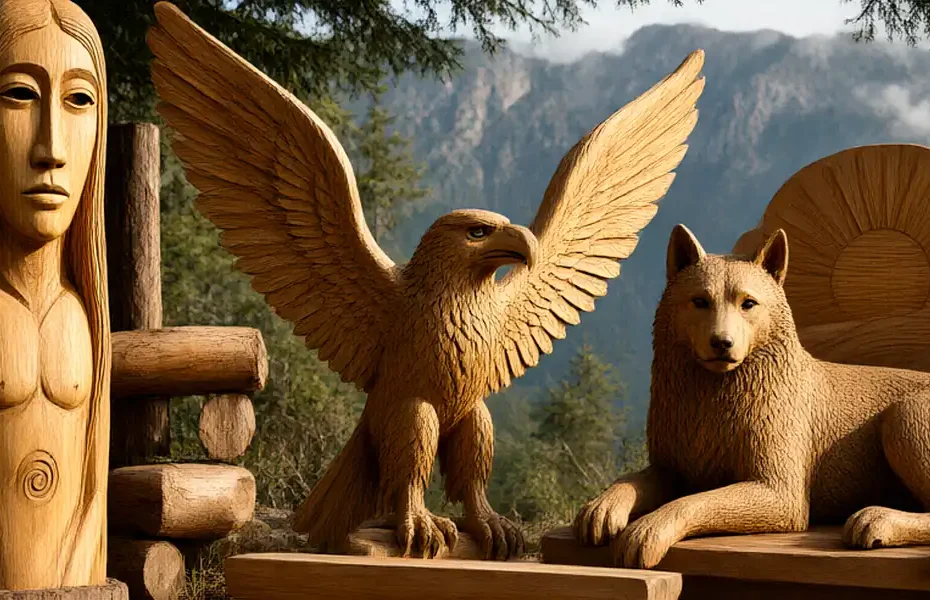
Today, chainsaw carving is part of the town’s civic DNA. Wooden bears, eagles, and larger-than-life figures appear outside motels, gas stations, and private homes. It’s a working-class art form with genuine roots here, not a curated gallery installation.
How the Hope Chainsaw Carving Competition Started
The event began as a modest demonstration by a handful of local carvers and grew, year over year, into a multi-day competition that draws talent from across Canada and the Pacific Northwest. What started as a way to celebrate the town’s timber heritage is now one of the Fraser Valley’s most photographed summer events.
The Hope Chainsaw Carving Competition: What to Expect
The annual Hope Chainsaw Carving Competition takes place in Memorial Park each August, transforming a quiet green space into a roaring, sawdust-filled arena. If you’ve never watched a chainsaw carver work, the speed is what surprises people most — a raw log becomes a recognizable animal in under an hour.
Dates, Location, and Schedule
The competition typically runs over a long weekend in August, with carving rounds spread across several days. Memorial Park, right in the heart of downtown Hope, hosts the main event. Admission is free, and the schedule usually includes:
- Morning and afternoon timed carving rounds
- Quick-carve demonstrations between main rounds
- Live music on a small stage
- Food trucks and local vendor stalls
- An auction of finished pieces on the final day
Because dates shift slightly year to year, check the official Hope Chainsaw Carving Competition listings before you book accommodation — August weekends in Hope fill up fast.
Watching the Carvers at Work
Stand close enough and you’ll feel the heat off the bar, smell the cut spruce and cedar, and watch chips fly in arcs. Carvers work with everything from small rear-handle saws to long-bar monsters for blocking out shapes. Many wear full protective gear — chaps, helmets, ear protection — and they’re usually happy to chat between rounds.
Our tip: arrive early in the day for the best light and the smallest crowds. Mid-afternoon gets hot in Memorial Park, and the shade is limited.
Buying a Carving: Auctions and Prices
If you fall in love with a piece, you can often buy it. Small carvings — owls, salmon, small bears — typically sell in the $100–$400 range. Larger competition pieces can run into the thousands, especially when they place in the judged categories. The final auction is the best chance to take home a signature piece, but bring cash or be ready to arrange transport; these things are heavy.
Where to See the Chainsaw Carvings in Hope
The competition is only part of the story. Hope maintains a permanent collection of chainsaw carvings scattered around town, and hunting them down makes for a great half-day walk.
Memorial Park and the Visitor Centre
Start at Memorial Park, where several large permanent carvings anchor the green space year-round. A short walk away, the Hope Visitor Centre typically displays a rotating selection of carvings and can give you a printed map of the town’s public art. It’s the single best starting point for a self-guided tour.
Downtown Hope and the Art Walk
Wallace Street, Hope’s main downtown strip, is lined with shops, cafés, and murals — and increasingly, chainsaw carvings placed outside storefronts. The town has leaned into an art-walk concept, with pieces positioned to encourage pedestrians to wander between blocks. Give yourself an hour to walk it properly, camera in hand.
Hidden Gems Along the Coquihalla River
Some of the most photogenic carvings sit outside the downtown core, near the Coquihalla River and along the roads leading out of town. These are often the pieces locals commissioned for their own properties, which means they’re visible from the road but not formally part of any tour. Keep your eyes open on the drive in and out — some of our favourite shots came from these unofficial stops.
Meet the Carvers and Their Signature Styles
Half the appeal of Hope’s carving scene is the people behind it. Many return year after year, and their styles are as distinct as signatures.
Local Legends and Visiting Talent
Local carver Peter Ryan is one of the names most associated with Hope’s chainsaw art, known for detailed wildlife pieces that balance rough-cut texture with surprisingly fine finishing work. Alongside him, visiting competitors from across BC, Alberta, and the Pacific Northwest bring their own approaches — some favour hyper-realistic animals, others lean into stylized, almost cartoonish forms.
Common Motifs: Wildlife, First Nations Stories, and Humour
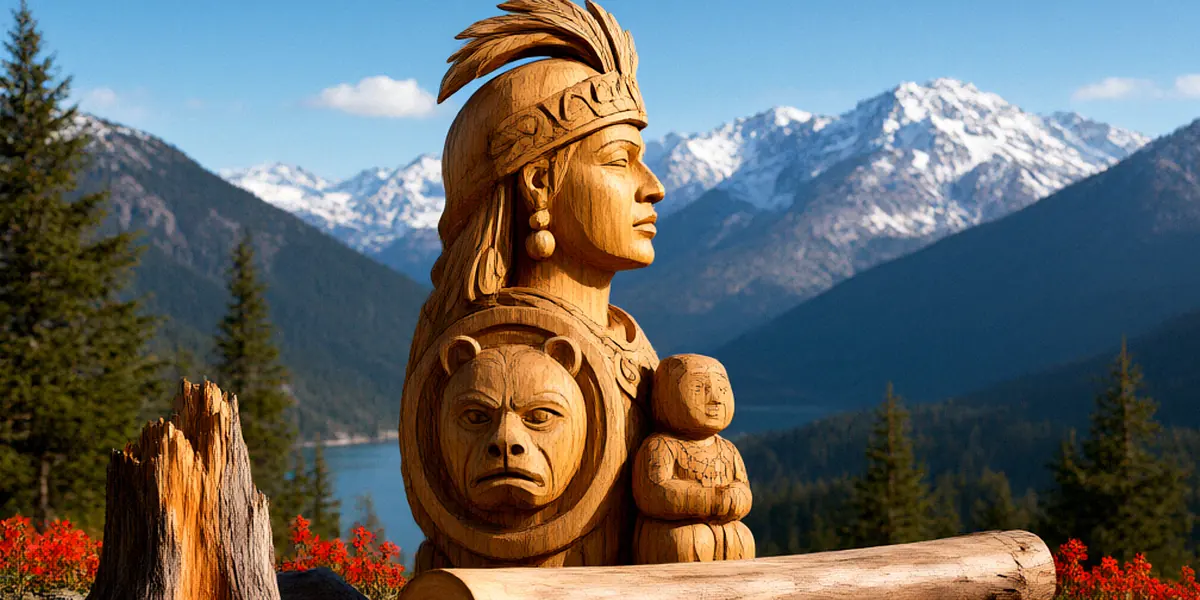
Walk through any collection in Hope and you’ll notice recurring subjects. Local carvers often depict bears, eagles, and Sasquatch in their work — the first two because they’re iconic BC wildlife, the third because Hope has long traded on its Sasquatch legend. You’ll also see:
- Salmon and river scenes tied to the Fraser and Coquihalla
- First Nations-inspired designs, often created in collaboration with or by Indigenous carvers
- Humorous pieces — grinning raccoons, oversized mosquitoes, cartoonish loggers
- Functional art: benches, signs, mailbox posts
The mix of reverence and humour is part of what makes the scene feel genuinely local rather than touristy.
Planning Your Visit: Tips from Our Team
We’ve made the drive from Vancouver to Hope more times than we can count, and a few practical notes will save you time and frustration.
Best Time to Go and What to Bring
August is peak season because of the competition, but spring and early fall are quieter if you just want to see the permanent carvings. Whenever you go, bring:
- A camera with a zoom lens — carvers work behind barriers
- Sunscreen and a hat; Memorial Park has limited shade
- Cash for vendors and auctions
- Sturdy shoes if you plan to walk Wallace Street and the riverfront
Parking downtown is free but fills quickly during competition weekend. Arrive before 10 a.m. or park a few blocks out and walk in.
Pairing Your Trip with Fraser Valley Highlights
Hope makes an excellent anchor for a longer Fraser Valley trip. Two pairings we recommend:
- Harrison Lake — about an hour’s drive from Hope, Harrison Lake is a nearby Fraser Valley destination often combined with a Hope visit. Go for the beach, the hot springs, and the resort-town vibe.
- The Othello Tunnels — in Coquihalla Canyon Provincial Park, the Othello Tunnels are a short drive from downtown Hope. The historic railway tunnels carved through granite are an easy, family-friendly walk and a perfect pairing with a morning of carving-spotting.
Add a stop in Chilliwack or Abbotsford on the way back to Vancouver and you’ve got a full weekend of Fraser Valley content.
FAQ
When is the Hope Chainsaw Carving Competition held?
The competition is held each August in Memorial Park in downtown Hope, BC, typically over a long weekend with multiple timed carving rounds, live music, vendors, and a final auction.
Is there an admission fee to see the chainsaw carvings?
No. The competition and the permanent public carvings around Hope are free to view. You only pay if you choose to buy a carving at auction or from a vendor.
Where can I see chainsaw carvings in Hope year-round?
Memorial Park, the Hope Visitor Centre, and along Wallace Street in downtown Hope are the best starting points. Additional carvings are scattered along the Coquihalla River and on private properties on the outskirts of town.
What else is there to do near Hope, BC?
Harrison Lake is about an hour away and pairs well with a Hope visit. The Othello Tunnels in Coquihalla Canyon Provincial Park are just a short drive from downtown Hope and make an easy add-on to any carving-focused trip.
What subjects do Hope chainsaw carvers usually carve?
Local carvers often depict bears, eagles, and Sasquatch, along with salmon, First Nations-inspired designs, and humorous pieces like grinning raccoons and oversized mosquitoes.
Hope’s chainsaw carvings are one of the Fraser Valley’s best free, family-friendly attractions — a small mountain town turning its logging history into something you can walk up to, touch, and photograph. Whether you come for the August competition or just to wander Wallace Street with a camera, you’ll leave with a memory of the rugged creativity that defines this corner of BC. If you’ve snapped a shot of a carving we haven’t featured, send it our way — we’re always adding to our Fraser Valley photo guide.